Thursday, 25 November 2021

A picture within a picture

Here is a photograph of C T Russell in his study at the Pittsburgh Bible House c. 1906. Notice the picture on the wall in the top left hand corner of this photograph.

If you look very closely, below is the photograph under discussion. It is a picture taken of the workers at the Bible House. I originally had two copies, one marked 1899 and the other 1902. Both came from a relative of W E Van Amburgh. As to which is the correct year, a lot would depend on when the Henninges were in America, between visits to Britain, then Germany, and finally Australia.


Bernhard researched the picture and provided the following information which clearly establishes the correct year as 1902 (or very shortly thereafter):


You see on the group photo brother William Van Amburgh and left brother George Garman. Both became members of the Bible House family in autumn 1900. So the photo couldn’t be taken before 1900.

Ernest and Rosa (Rose) Henninges were in England from April 1900 till November 1901 and than he came back to Pittsburgh. They stayed there till June 1903; than they went to Germany. So the photo couldn’t be taken before November 1901.

Otto Koetitz and his wife Jennie succeeded Henninges in November 1903 in Germany. Otto was a coworker in Bethel from 1896 followed by his wife in 1900.

Albert Williamson became a member of the Bible House staff in 1899. Harriet Stark (who married him in 1905) and her mother Britee C. Stark began to work in the Bethel in 1900.

Laura Whitehouse lived also there since 1900.

Johannes Gotthold Kuehn came also in 1900 to the Bible House as a part-time worker. His wife Ottilie Friederike and son Alfred followed in 1902.

So this brings us to the date of 1902, maybe early 1903.


Subsequent to this article being written originally, Bernhard incorporated this material into his book on the Bible House.


Thursday, 4 November 2021

The Hemery archive

 A couple of years ago I received a notification that my inbox was so full it would shortly not accept new mail unless I went through it all and deleted stuff. I did a reverse order shuffle to find emails from way back that never got deleted at the time. One that has now prompted this post was an email from a reliable source in India (!) from 2005, about a mouth watering cache of material that had apparently been recently sold on eBay.

The story as told to me was as follows:

Apparently the library of Jesse Hemery appeared on the market only a few months back. If I have the story correctly it was bought as part of a job lot of second hand clothes etc by a lady who deals in that sort of thing. It  seems Jesse Hemery's trunk was full of most interesting items including and original Three Worlds, about 115 letters from Russell, mostly handwritten, 50 or 60 from Rutherford and a few from Knorr, various photos and numerous other books including Horae Apocalypticae etc. Had a lot of interest, and it finally went for 34,000 GBP. There cannot be many who would pay that kind of money. Do you have any ideas? Apparently included were the following:

178 letters from Pastor C T Russell mostly written in hand from about 1900 to 1916 . Some are typed, paper very aged in some, some splitting where badly opened. Some deal with Bible Students Conventions in London, Glasgow, The new London Tabernacle, The London Opera House Photo Drama show, Travel to London by steam ship. Most are of practical rather than theological content.

74 letters from J F Rutherford, mainly typed and signed from a variety of locations. In NY, California, etc. Most again are practical. Bible Student Conventions at Alexander Palace, Royal Albert Hall, travel arrangements. Radio broadcasts from London. BBC monopoly etc.

12 letters from NH Knorr typed but signed - general admin at Craven Terrace post War.

200 Miscellaneous  copies of the Outlook for the London Company,  Judge Rutherford and ‘Empire news’, His Majesties Aliens Dept letter re deportation of American A Schroeder, letters from various UK Bible Students groups non WT Society enclosures. Letters from European Offices of Society 1920 – 1950. Letters from Scottish brethren Minna and John Edgar.

Maybe 60 Photos - various of Russell at conventions around UK?  With Hemery, similar with Rutherford. Photos of Craven Terrace inside and Elders.

Books, Booklets various Old Theology, Golden Age, Towers, Convention reports – random selection about 90 items, paperback Plan of the Ages – cream cover (signed as gift by Russell).

Audio Angelophone Hymn record – broken/cracked

Non Society material - Books by various authors: Elliot (Horae Apocalypticae), Barton (God’s Covenants), Barbour (Washed in his blood.), Henry Drummond (Dialogues on Prophecy), Morton Edgar (Prayer and the Bible, etc

Hemery books! – Revelation Unfolded, The Second coming of Jesus Christ - 1950’s. He seems to have left the Society by this time.

 (end of list)

The big question is where did it all go? Has any of it surfaced on the internet in the collecting world since then? Or has someone got this all lined up as part of their pension fund?

Extra family notes

Jesse Hemery (1864-1963), former vice-president of the IBSA, left association with the Watchtower Society around 1950. His wife, Mary, died when they were both in association back in 1937. They had one daughter Bertha who lived in London Bethel as a young person. She married Frederick William Crane. They had one son, Jack Hemery Crane, who died at El Alamein.


Saturday, 30 October 2021

Families in Bethel

 The Story of the MacMillan family

An earlier post on this blog (search for article “The Brooklyn Bethel Family in 1910 and 1913”) showed how many children at one time lived with their parents at the Society’s headquarters. This was particularly true after the move to Brooklyn in 1909 and the establishment of Bethel.

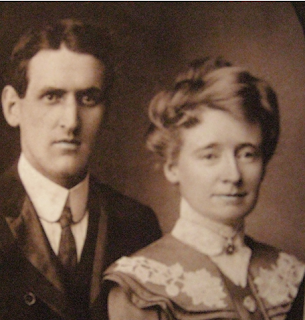
One such family was that of Alexander Hugh MacMillan (1877-1966). He is known today for his 1957 autobiographical work Faith on the March. However, although the book covers his conversion and many key historical facts of Watch Tower history, much of his personal life is omitted. He does mention in his book (on page 43) that he was married in 1902. For the record, his wife was Mary Goodwin (1873-?). The marriage took place on October 6, 1902, when he was 26 and she was 29. She supported him as a Bible Student and full-time worker for the Watch Tower Society.

Picture of Alexander and Mary taken from Who’s Who in the Bible Student Movement.

Alexander and Mary were to have two children, and in the census returns for the Brooklyn Bethel taken in April 1910, the whole family are living there. Alexander is listed as Minister, Bible Society. The head of the whole household is given as Charles Taze Russell. The MacMillan’s first son was Albert Edmund Cole MacMillan who was born on December 11, 1907. In the 1910 census he is 2 years old. Their second son, Charles Goodwin MacMillan (shortened to just Goodwin in the census return) was one month old. Charles Goodwin was born on March 28, 1910, but died of tubercular meningitis on February 3, 1912.

The 1910s was a tumultuous decade for the MacMillans. It included the death of a child, the death of Charles Taze Russell, the appointment of a new president, Joseph Franklyn Rutherford, and then the arrest of key officals on charges of sedition in 1918. Alexander was one of those convicted and sentenced to twenty years imprisonment. The men were freed in 1919 and all charges then dropped.

By the 1920 census Alexander, Mary and Albert Edmund were back in the Brooklyn Bethel with J F Rutherford as the head of the household. Here is an extract from the census return. Albert Edmund was now 12. Alexander is listed as Minister, Religious Pub(lishing) House.


Travelling forward to the 1940 census, Albert Edmund is no longer with them (at some point he married Dorothy, born 1908, died 1969) and Alexander and Mary now live in West Virginia. Alexander’s occupation is now Regional Director for the Watch Tower Society.

According to his life story in The Watchtower for 1966 Alexander went back to live in Bethel in 1948. It may be that Mary had died. He was to work extensively at the Society’s radio station WBBR and then write his famous book.

When he died, the newspapers gave Albert Edmund as his main surviving relative.


Albert Edmund did not stay with the religion of his parents. He died in 1971 and was buried next to his wife in the Long Island National Cemetery.


Saturday, 16 October 2021

Final resting places

 Graveyard memorials are an interesting adjunct to genealogy and history. They often tell us about attitudes towards death and also fame, going right back to the pyramids of Egypt. It is notable in the 19th century with the attempts of Victorians (in the UK at least) to outdo their dead rivals in the cemetery with spectacle. It’s been said that the attitude in 19th century Britain was – if you can’t take it with you, you can at least show the rabble you once had it.

With that in mind, it is interesting to note the grave markers of the first six presidents of the Watch Tower Society.

William Henry Conley

Conley was a wealthy industrialist who became first Watch Tower president in 1881. By 1884 he had left regular association with Charles Taze Russell to go on a different religious journey. But his memorial is typical of wealthy men who made their name.

Photograph by the author

In fairness to Conley, his actual grave marker was quite standard, alongside almost identical ones for his wife and adopted daughter. But the family memorial for his name is quite striking, even today.

Charles Taze Russell

CTR was the first president of the incorporated Society in 1884, and founder of the magazine now known as The Watchtower (originally Zion’s Watch Tower and Herald of Christ’s Presence). He gave instructions for a simple funeral at the Society’s own plot in United Cemeteries, Ross Township, Pittsburgh. His first marker pictured in the 1919 convention report was very simple, but something more elaborate was installed in 1920. Even so, it was a fairly modest affair, when compared with other markers of the time, including in the same series of cemeteries.

Photograph by the author

It should be noted that the pyramid installed near the grave marker, was not for CTR but for the whole Bethel family along with colporteurs of the day. Like a war memorial it was originally intended to commemorate the names of 196 people. In practice only nine names were ever engraved on it before the idea was abandoned. The structure was taken down in 2021.

Joseph Franklyn Rutherford

The second president of the incorporated Society was Joseph Franklyn Rutherford. Originally a grave space was reserved for him on the same site as CTR. But the headquarters were now in New York and a new graveyard was established on Staten Island. The Society bought land in 1922 and established both a farm and a radio station there. The radio station had the call letters WBBR and opened for transmission in 1924. Adjoining this property was a famous landmark, the Woodrow Road Methodist Church, with a number of graveyards surrounding it. The Society was to have its own section here. It is not known when this began, but the last interment of a Bethel worker at the old cemetery in Pittsburgh was that of Charles Buehler in 1925.

When JFR died he was buried at Staten Island.

Below is a snapshot from Google Earth taken from Woodrow Road showing part of the cemetery.

The Woodrow Road Methodist Church is on the right. On the left is a fence separating a housing development, which was where the Woodrow Road entrance to the Society’s property used to be. The radio masts for WBBR were behind the Methodist church and their own graveyard adjoined the WBBR property. The graveyard is noted for the policy of having no grave markers at all. This was used for Bethel workers until the end of the 1960s, even though they sold off the radio station in 1957. The last recorded interment was in December 1968. (See The Watchtower magazine for February 15, 1969, page 125.) So J F Rutherford has no grave marker at all. He is buried in this private cemetery area with five others who went to prison with him in 1918.

Nathan Knorr, Fred Franz and Milton Henschel

In the 1970s a new cemetery was established at Watchtower Farms in Walkill, Ulster County, NY. It is also a private cemetery but this time on private land, and now the decision was taken to have simple grave markers flat on the ground.

Here are the markers for the next Watchtower Society presidents, Nathan Knorr, Fred Franz, and Milton Henschel.

Nathan Knorr and Fred Franz

Milton Henschel

It is an interesting progression from the memorial for William Henry Conley.


Saturday, 9 October 2021

Pictorial Memories

 This blog’s function is to research history from the era of CTR. However, from time to time, material of a more recent nature has been offered. Some photographs from private sources came to light on the death of the original owners, and the current owner gave me permission to publish them several years ago on a now defunct blog. To my knowledge, all the people in the photographs have now passed away, so the material is being reproduced here.

The photograph below is the earliest and advertises the talk Government and Peace. This was relayed by wire from America to Britain in 1939 and the venue here was Bristol.


The next two photographs are convention pictures that date from 1946.


 The next photograph is from the same era as the convention photos. The Consolation magazine changed to Awake in 1946 and the Watchtower magazine changed from large format to its present page size in 1950, so the photo fits between those years.


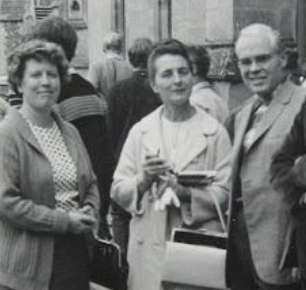
And now for some pictures of people. The description will be under the photographs.


The group photograph is Molly, Margaret and Glen Howe. Howe became a very famous legal advocate for the witnesses in Canada. He married Margaret from Portsmouth where this photograph was taken. I personally visited Molly on several occasions. Molly and Margaret first contacted the current owner of the pictures in 1950 with the witnesses’ message. As one might say, the rest is history.


This is a photograph from the 1950s of Pryce Hughes.

Hughes became Branch Servant in Britain in 1942. The previous Branch Servant, Bert Schroeder from America was deported - with the witnesses’ view of war and with a name like Schroeder it was perhaps inevitable at that time. Pryce Hughes replaced him, although he was in jail as a conscientious objector at the time. He remained Branch Servant until the 1960s, when as an older man he became Bethel Home Servant. You nearly always found him in the garden when visiting the British headquarters that had moved to Mill Hill, London, in the late 1950s.  I met him on a number of occasions.


This is a photograph of Phil Rees.

Phil Rees was very well known in Britain for decades. In Australia during the last war he was involved in the Society’s activities when they were under ban. I believe he married the branch servant’s daughter, and not long after the war came to Britain where he worked as Factory Servant at the headquarters in Craven Terrace and then Mill Hill for many years. One of my claims to notoriety was when Phil Rees actually mentioned me by name in a District Convention talk in 1977. People turned to those sitting next to them and said “Who...?”


This photograph dates from a British convention in 1958, and will have been taken in the convention office. On the left standing, and holding the American 1958 convention report, is Eric Courtney. Next to him, seated and poring over a typewriter, is Tony Byatt. At the back of the picture is Jim Robbins.

Jim Robbins and his wife stayed at our home for a week in the 1950s. Eric Courtney was a well known district servant in his day covering the 40s, 50s and into the 60s. I conducted several special schools with him in the 1970s, and ultimately attended his funeral.

As a young teenager, Tony Byatt went around the second-hand bookstalls in London in the early days of the Second World War with Bert Schroeder, the Branch Servant. As noted above Schroeder was deported in 1942. He was later involved in the setting up of the Gilead Missionary School in America. Decades later in the 1980s I was there when Bert and Tony met up again and reminisced at length. I used Tony Byatt’s personal library on a number of occasions for various writing projects and when he died I was left some books in his will.

So although the photographs are not mine, I do have a personal interest in several of them. With thanks to the present owner for making them available.


Tuesday, 5 October 2021

French songbooks

A few years ago Miquel kindly sent me some photographs of historical French language Songbooks that came to hand.


This songbook, a second edition printing from 1919 corresponds to one of the Zion's Glad Songs series.


This 1928 songbook corresponds with the 1928 Songs of Praise to Jehovah, which basically replaced Hymns of Millennial Dawn for IBSA meetings.


This 1948 songbook corresponds with the 1944 Kingdom Service Songbook, which was the book released for when singing was reintroduced at general congregation meetings in 1944 in English language congregations.


Spanish songbook


A few years ago Miquel kindly sent through the two interesting photographs above. This is the Spanish version of Hymns of Dawn, and as such is extremely rare. This version was published in 1925. It differs from the English language version in that some hymns were taken from the original, while others were taken from Spanish evangelical hymnals of the day.

This is a second or new edition of the Himnario de la Aurora del Milenio. The first edition dates from 1919, and may have been published as a supplement to the Spanish Watch Tower. 

Sunday, 26 September 2021

Basil


Basil Stephanoff from Separate Identity volume 2

The book Jehovah’s Witnesses - Proclaimers of God’s Kingdom mentions briefly one Basil Stephanoff in connection with the preaching work in Macedonia. On page 406 it has this to say:

“What about Turkey? During the late 1880s Basil Stephanoff had preached in Macedonia in what was then European Turkey. Although some had seemed to show interest, certain ones who professed to be brothers made false reports, leadng to his imprisonment.”

So who was Basil Stephanoff?

The primary information we have about him comes from two letters he wrote to Zion’s Watch Tower. The first gives the basic information extracted for the Proclaimers book. The second, from 1894, has him writing in support of CTR in view of the scenario described in A Conspiracy Exposed. It also showed that Basil was now in America.

A brief history of him is found in Who’s Who in the History of the (Bible Student) Movement before 1920. To quote in full:

“He was active in Macedonia (European Turkey) and Bulgaria in the late 1880s. He was imprisoned because (he claimed) false testimony at the hands of false brethren. He escaped to America, settling in Michigan. He was still a Watch Tower adherent in 1894 but drifted away by 1903 when we find him involved with the Masons and on his way back to Macedonia to fight against the Turks. A religious journal calls him a General in the Macedonian resistance.”

A more detailed history is found in Separate Identity: Organizational Identity Among Readers of Zion’s Watch Tower: 1870-1987 volume 2, pp. 552-553.

Organizational Identity reviews his religious history. Basil was a man who had a finger in a number of theological pies. Over the years he was involved with what became the Church of God (Anderson), the Mennonites, the Baptists, the Children of Zion Church, Butler’s Essoteric Fraternity, as well as fighting for the Macedonian Nationalist cause. His association with Zion’s Watch Tower was hardly exclusive.

At the time the above research was being prepared for Separate Identity, I did my own research for what we might call Basil’s “human story.” It appeared on a blog and was almost immediately forgotten, because it was not relevant to the blog’s focus as such. All it did show was that in those early days people often dipped in and then dipped out of involvement with Bible Students and the Watch Tower Society. Some were searchers after truth with good motives, others had “feet of clay.” The latter are often more interesting to research – at a suitable historical distance. Some early associates of CTR fell into the latter category. Lapses from moral grace don’t have to be the exclusive preserve of religious people, but the contrast between theory and practice is often fodder for the tabloid press. And this is history – these people aren’t our relatives to cause us any embarrassment today. So this is what I discovered about Basil.

Basil’s personal history has its mysteries. At one point in researching his back story, I rather gleefully assumed I had a case of bigamy here, but alas, a discovery of not one but two divorces settled that in Basil’s favor – if that is the right expression to use. But I am getting ahead of myself.

The fuller chronicle of Basil that makes the history book explains he was in the United States in the 1880s, although on census returns he only ever admitted to entering the country in 1891 or 1892. We know from passenger lists that he travelled from England to the States in January 1892, giving his occupation as labourer.

Within a short space of time Basil gets married to Annie Brook, on April 12, 1892, in the Children of Zion Church, and his marriage certificate (registered in Kent County, Michigan) gives his occupation as minister of the gospel. The officiating minister at his wedding is H A Olmstead, Pastor Children of Zion Church.  Annie is a dress maker and comes from England. A 1900 census return says she came to America in 1886, six years before Basil, and a 1920 census return says she became a US citizen in 1892.

At the time of the marriage Basil is 31 and Annie is 28. His father’s name is down as Stephan Boginoff, which suggests the registrar had a silly moment, since the correct name in all other documents is Bogin Stephanoff. Basil’s mother’s name is Mona. Annie conceives almost immediately and their only son, John Basil Stephanoff is born on January 26, 1893 (information from John B’s WW1 draft card below).

John B became a judo instructor during WW2 and lived until 1976. John B married and had one daughter, whose married name was Jean Schmit, and who died in 1980, but there the trail ran cold for this researcher.

In trade directories for the late 1890s through to 1901 the family are in Grand Rapids, Michigan, and Basil is now listed under Boots and Shoes, or shoe dealer in the 1900 census.

But all is not well in the Stephanoff household. On November 5, 1900, Annie files for divorce on the grounds of Basil’s cruelty and the uncontested divorce is granted on June 18, 1901. Annie will stay in Grand Rapids. In quite short order, and while still giving his residence in Grand Rapids, Basil ties the knot again, this time marrying Alvesta S Nagle of Bellevue, Ohio, on October 8, 1902. The marriage is registered in Kent County, Michigan. Basil is still a shoe dealer, Alvesta has no profession, and Basil’s parents are down as Stephanoff and Mona.

But just four months later there are divorce proceedings again. This time the uncontested charge is cruelty plus fraud, and the decree absolute is granted on June 30, 1903.

Alvesta disappears from the record, but first wife Annie with son John B continue to appear in Grand Rapids directories, she as a dress maker and John B when he leaves education as a salesman.

Basil then reappears in Marion County, Indiana, in the 1910 census. The age, place of origin, and year of immigration show it is our man. He has now become a lawyer. And the census specifically asks him whether he is single, married, widowed or divorced. His answer is plain - SINGLE.

Whereas Annie in the Grand Rapids trade directories for 1915 and surrounding years puts herself down as the widow of Basil.

Basil dies of nephritis in Marion County, Indianapolis, on May 19, 1925. He must have kept certain documents with him because his death certificate lists his parents as Bogin and Mona. But he is now listed as a widower, with the name of his former partner unknown. His age is given as 62, which if correct, means he was born in 1862 or 1863, which more of less fits the age he gave when getting married to Annie Brook.

Basically Basil dies alone, and out of touch with his son.

I suppose I was looking for a “bad boy” in Basil, and these snippets from records show someone who could bend the truth at times, along with two failed marriages and the accusation of cruelty.

It makes me think of another “bad boy” who lived at the same time and who also associated for a while with the Bible Student movement. That was Albert Royal Delmont Jones, who was the editor of Zion’s Day Star before his fall from grace. Jones deserted his first wife, the mother of his children, and married a society beauty. She in turn dumped him when he lost his fortune, and his third attempt at matrimony was to someone later convicted of bigamy, and who featured in the Fatty Arbuckle scandal. If that wasn’t enough excitement for one life, somewhere along the line there is a possible fourth marriage, which if true, suggests a less than truthful response to the registrar. All of this can be read by newer readers if you punch in the search terms “Albert Delmont Jones” on this blog to see a 12 part series which covered his life story in some detail.

There are some similarities in these stories of former Watch Tower adherents, Albert and Basil, although Albert wins the prize for major league “bad boy.” But with their tangled personal histories, there is one thing they do both have in common. Both had family who survived them. Both died alone. Maybe they deserved it, but I still find that rather sad.

Wednesday, 15 September 2021

Peace - or Spot the Difference

 (reprinted and revised version)

A casual visitor to Brecon in South Wales, UK, might be tempted to visit the Brecon Cathedral, parts of which go back over nine hundred years. One of the exhibits in it, dedicated to a local dignitary, is a painting called “Peace, and a little child shall lead them.” The artist was William Strutt (1825-1915) although the caption in the cathedral only names the donors! It was painted in 1896. The picture was based on Isaiah 11 and the animals from left to right are in the order as described in scripture.


This has a connection of sorts with the Photodrama of Creation. Here is one of the original slides from the Photodrama. This was reproduced in the scenario, and was also later used by Frederick Lardent in his Bible Student motto card series, as card number L-9. The motto card is not as colorful and the circle is a bit smaller.


The Photodrama spawned a series of postcards. A set of 40 cards was advertised in The Watch Tower in 1917 (see reprints page 6077). Many readers will have seen these sets and they are probably online somewhere as well. Although the set was numbered 1-40, a couple of later numbers have been discovered. Below are cards 44 and 47b.


Looking at all the reproductions above, these are actually four different pictures. It’s a case of spot the difference.

Why did they keep on redrawing (not always very successfully) this particular picture? It may have been a copyright issue originally. Strutt complained before he died that his own copyright had expired and he was making no money from the picture. However, a lithograph of the picture was widely marketed and numerous homes had it on their walls. Perhaps that version was still under copyright. However, it still doesn’t explain the Society’s repeated attempts at pastiche to portray the same scene.

It is not the most important research question in the world, but a curiosity. And while we are touching on the official Photodrama series, does anyone have details of any other Photodrama postcards higher than 40? There is a card numbered 47a which has a woman on a veranda overlooking a paradise scene with animals captioned PAX, but apart from that and 44 and 47b reproduced above, I have never seen any others higher than 40.

When the original artist Strutt died his grave marker carried the inscription “Painter of Peace.” A highly prolific artist in his day this was to be his main legacy.


Personal Note

Anyone tempted to visit the Brecon Cathedral should be aware that they employ a particularly aggressive company to manage the car parking. The machine took my money but did not spit out a ticket. Having been photographed entering and leaving the car park (not in dispute) I was accused of not paying (very much in dispute). I demanded a print-out of their records for the actual time I was there to see what showed up, and they declined on the grounds of data protection. I therefore declined to pay the “fine.” Correspondence and threats went back and forth for several months before I “won.” I doubt I will be visiting Brecon Cathedral again.

Note

Anyone interested in the varieties of postcard used should read the comment trail from Mike C.